Nano Banana Prompt Guide + 75 Ready-to-Use Prompts
🌟 Introduction
In the fast-evolving world of AI image generation, the quality of your prompts plays a decisive role in shaping the final output. As AI models become more capable and widely available, creative results are no longer limited by technology itself, but by how clearly intent, structure, and visual direction are communicated. Even highly advanced systems can produce generic, inconsistent, or unfocused images when prompts are vague, overloaded, or poorly organized.
This is where the Nano Banana prompt becomes especially valuable. Designed specifically for the Nano Banana series, a Nano Banana prompt relies on a structured and precise instruction framework that helps the AI understand not only what to generate, but how to generate it. By defining elements such as subject, composition, style, and visual detail in a clear hierarchy, Nano Banana prompts enable consistent, professional-quality results. In this guide, we’ll break down how to write effective Nano Banana prompts and show how AIEnhancer helps transform simple text instructions into reliable, production-ready creative outputs.

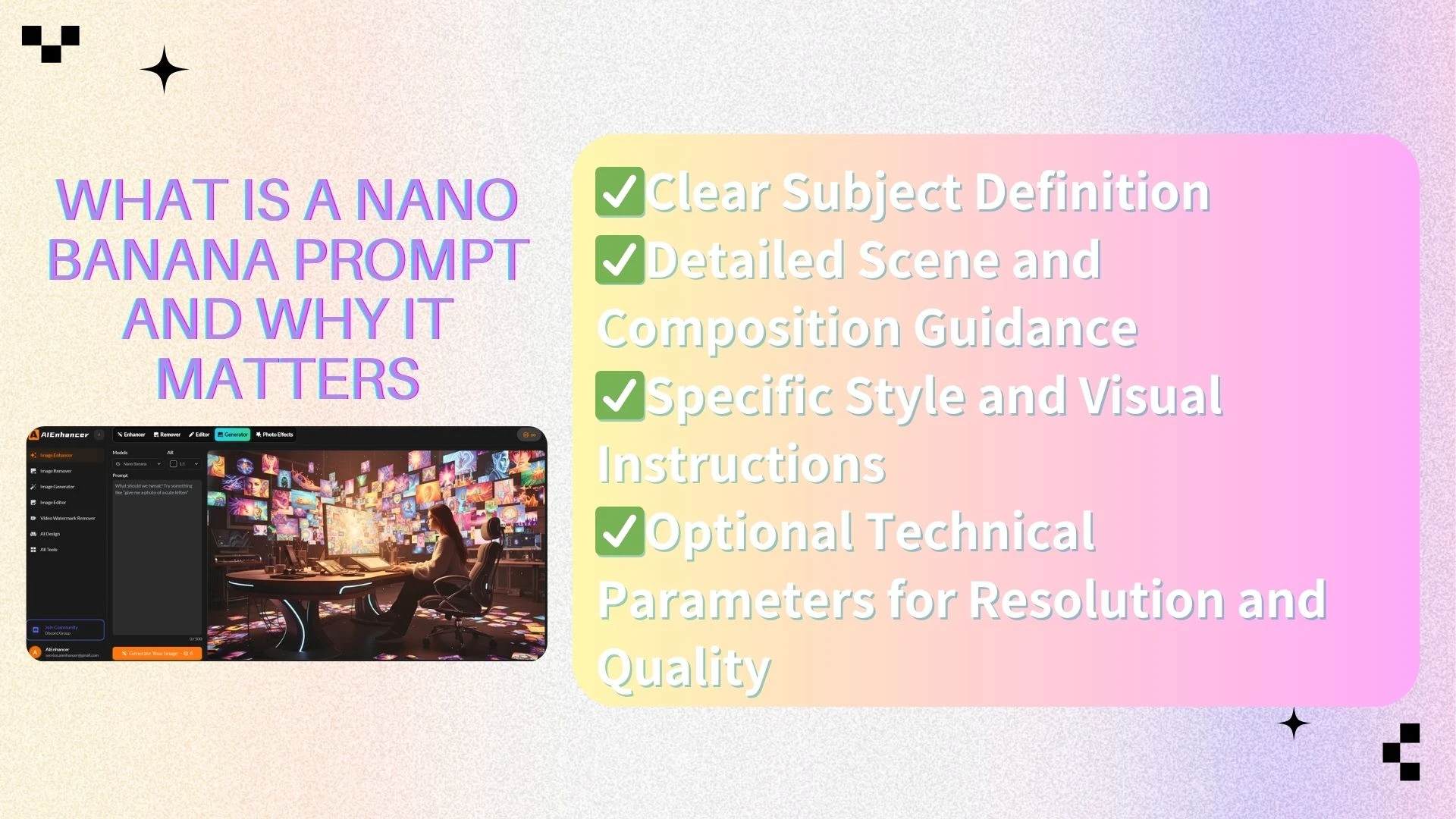
🤖 What Is a Nano Banana Prompt and Why It Matters
A Nano Banana prompt is more than just a regular AI prompt. Rather than relying on loose descriptions or isolated keywords, it functions as a carefully crafted, layered instruction set that helps Nano Banana models interpret creative intent with accuracy and consistency. A well-written Nano Banana prompt typically addresses four core dimensions, each playing a distinct role in shaping high-quality AI-generated images.
🎯 Clear Subject Definition
Every effective Nano Banana prompt begins with a clearly defined subject. This means explicitly stating what the primary focus of the image should be—such as a product, a character, a user interface, or a conceptual visual. Clear subject definition helps the model establish visual priority, ensuring that the most important element of the image receives appropriate emphasis. Without this clarity, the AI may distribute attention across multiple elements, leading to outputs that feel unfocused or visually inconsistent.
🌄 Detailed Scene and Composition Guidance
Beyond the subject itself, a Nano Banana prompt should provide guidance on scene context and composition. This includes background environment, spatial relationships, camera angle, framing, and overall visual hierarchy. By defining these elements, you give the Nano Banana model a structural framework to follow, resulting in images that adhere to basic principles of design and photography rather than arbitrary layouts. Strong scene and composition instructions significantly improve coherence and visual balance.
🎨 Specific Style and Visual Instructions
Style is a critical component of visual consistency, especially in professional or branded use cases. A Nano Banana prompt works best when it specifies the desired aesthetic in concrete, visual terms—such as illustration style, lighting mood, color palette, or level of realism. These instructions help the model align outputs with a consistent visual language, making it easier to generate multiple images that feel cohesive rather than stylistically fragmented.
⚙️ Optional Technical Parameters for Resolution and Quality
In addition to creative direction, Nano Banana prompts can include optional technical parameters that affect image quality and usability. Instructions related to resolution, sharpness, edge clarity, and noise control help ensure that outputs meet practical standards for digital or commercial use. When combined with AIEnhancer, these parameters allow the model to execute prompts with greater precision, producing clean, high-quality images while reducing the need for repeated refinement.
When used with AIEnhancer, a Nano Banana prompt enables the Nano Banana model to execute instructions more accurately and consistently. Clear structure replaces guesswork, resulting in reliable outputs and a smoother creative workflow. In contrast, vague or unstructured prompts often lead to inconsistent results and unnecessary iteration, making a structured Nano Banana prompt a critical foundation for professional AI image generation.
🔍 Generic Prompts vs Structured Nano Banana Prompts
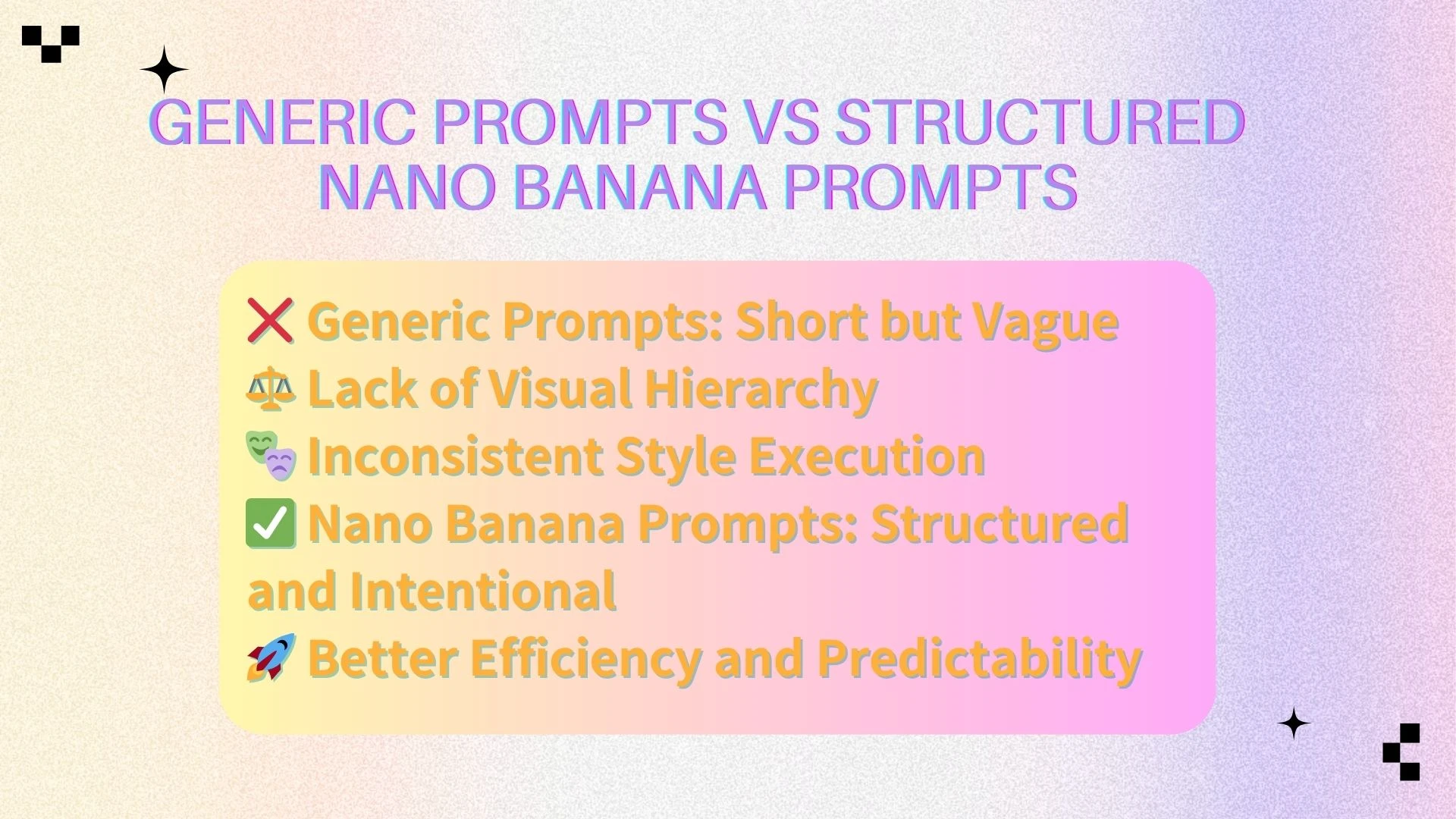
In AI image generation, many users rely on short and abstract instructions. While this approach may seem fast, it often produces inconsistent results. The key difference between a generic prompt and a nano banana prompt lies in structure, clarity, and execution control.
❌ Generic Prompts: Short but Vague
A prompt like “modern smartwatch, cinematic lighting, clean background” sounds clear but leaves many decisions undefined. Without guidance on composition, focus, or detail level, the AI must interpret missing information on its own.
⚖️ Lack of Visual Hierarchy
Generic prompts rarely define what should stand out in the frame. Without a clear focal point or composition rule, images can feel flat or visually unbalanced.
🎭 Inconsistent Style Execution
When style instructions are minimal or abstract, outputs may vary dramatically between generations. This inconsistency makes it difficult to maintain a recognizable visual identity.
✅ Nano Banana Prompts: Structured and Intentional
A nano banana prompt follows a defined framework—subject, action, environment, composition, style, details, and optional technical parameters. Each layer reduces ambiguity and strengthens control over the final result.
🚀 Better Efficiency and Predictability
Because a nano banana prompt functions like a design brief, it minimizes guesswork. The model executes clearer instructions, reducing iteration time and producing more reliable, professional-quality visuals.
In short, a generic prompt is a rough request, while a nano banana prompt is a structured creative plan—transforming AI generation from random experimentation into intentional design thinking.
🧩 The Core Structure of a Nano Banana Prompt
Before diving into templates, you need to understand the underlying formula that makes a Nano Banana prompt effective. Think of it as a blueprint for professional AI image creation.
General structure:
Subject + Action/State + Environment + Composition + Style + Details + Technical Parameters
Let’s break down each element:
🎯 Subject
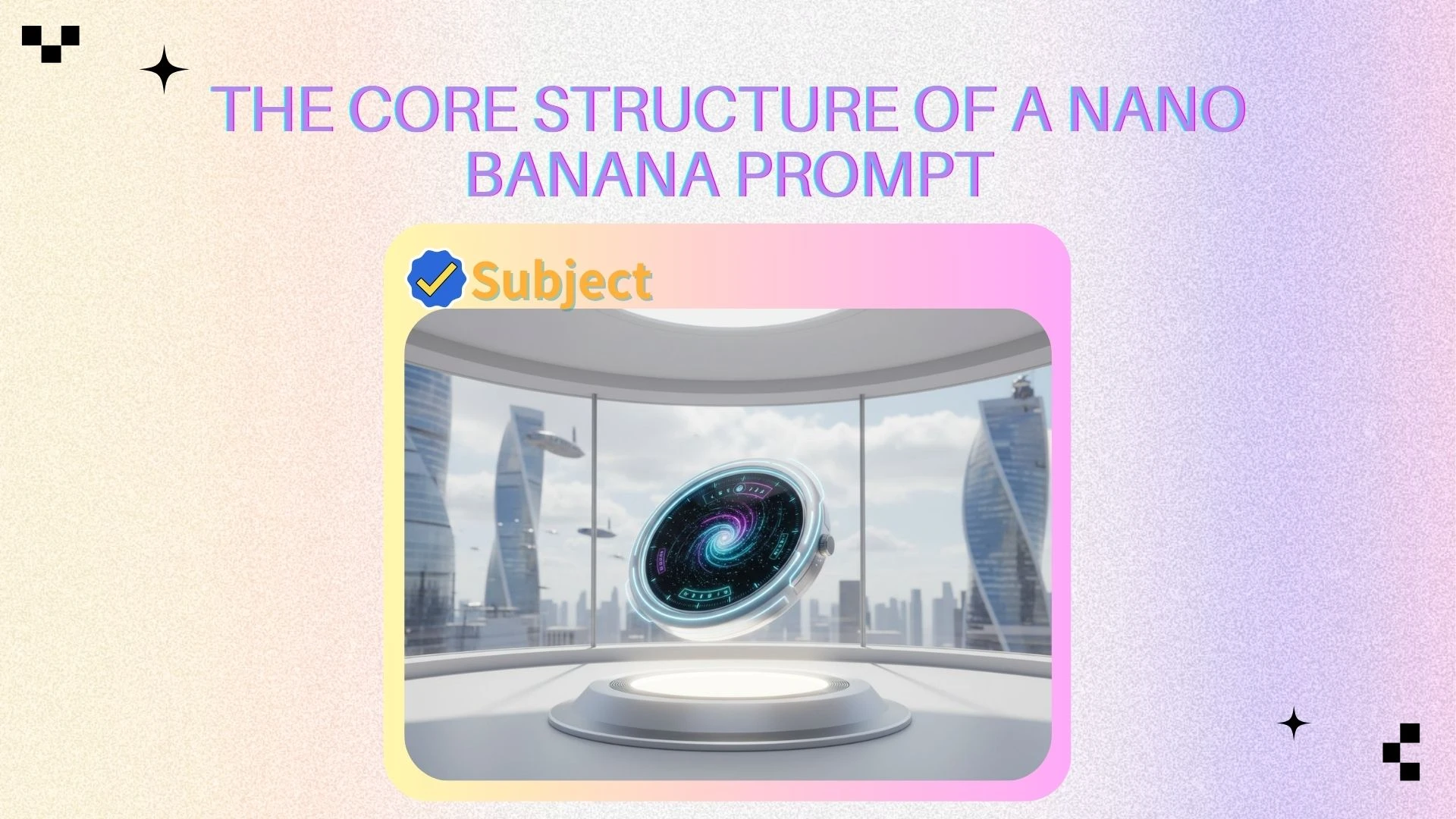
Define the main focus of your image clearly. The subject is the visual anchor of the entire Nano Banana prompt and determines where the model should place its primary attention. A clearly defined subject helps the AI avoid ambiguity and prevents it from spreading detail across unnecessary elements. Whether you are generating a product shot, a character illustration, a UI interface, or an infographic, the subject should be described in concrete, visual terms rather than abstract labels. The clearer the subject, the more intentional and controlled the final output will appear.
● Product
● Character
● UI interface
● Infographic
Example:
A futuristic smartwatch floating in mid-air
⚡ Action / State
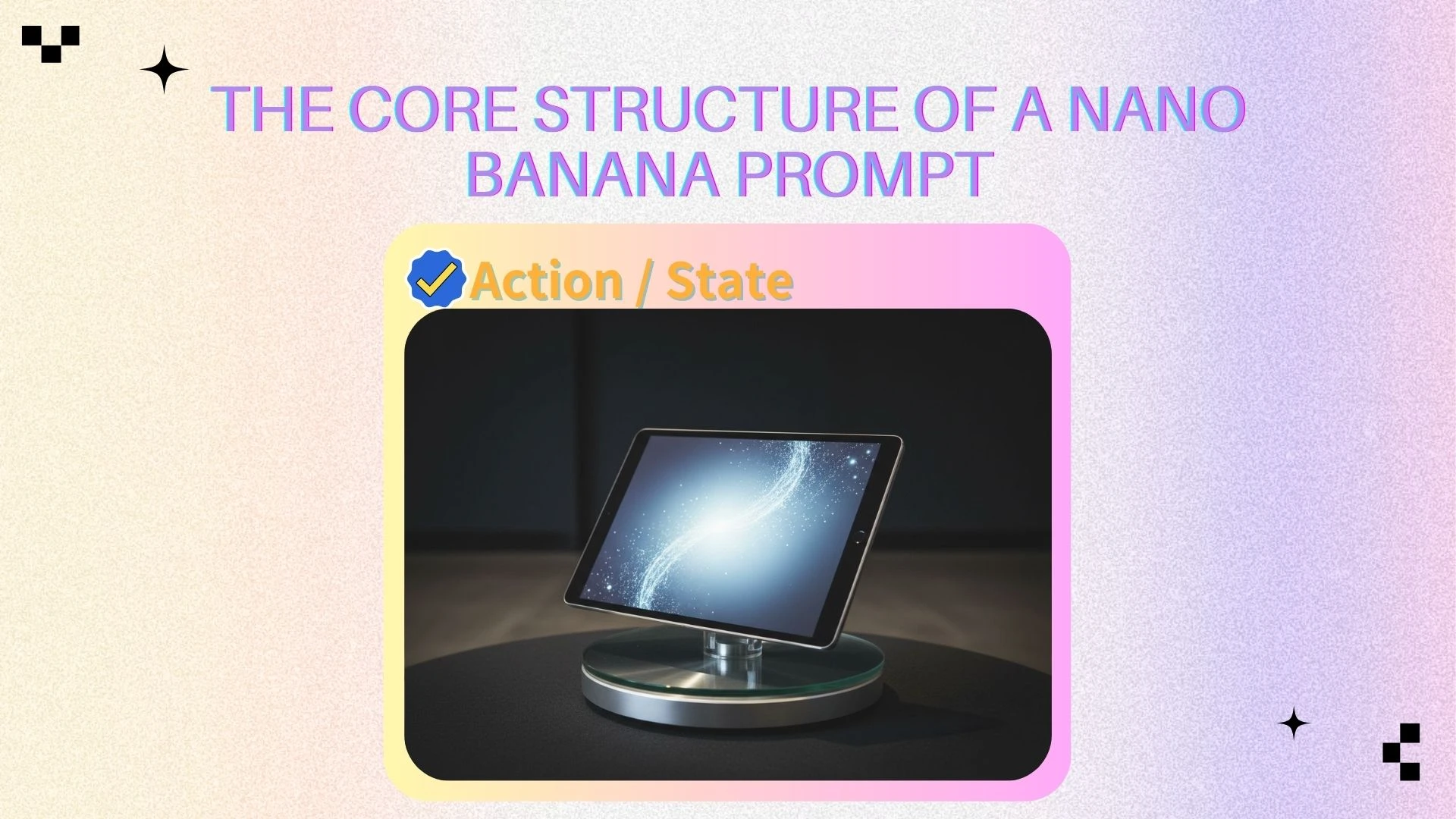
What is your subject doing, and in what condition does it exist within the scene? Action or state adds context and intent to the subject, transforming it from a static object into a purposeful visual element. Even minimal actions—such as rotation, illumination, or interaction—can dramatically influence how dynamic and engaging the image feels. For characters, this may involve posture or emotion; for products or interfaces, it often describes functionality or motion.
Example:
Rotating slowly, powered on, glowing screen
🌄 Environment
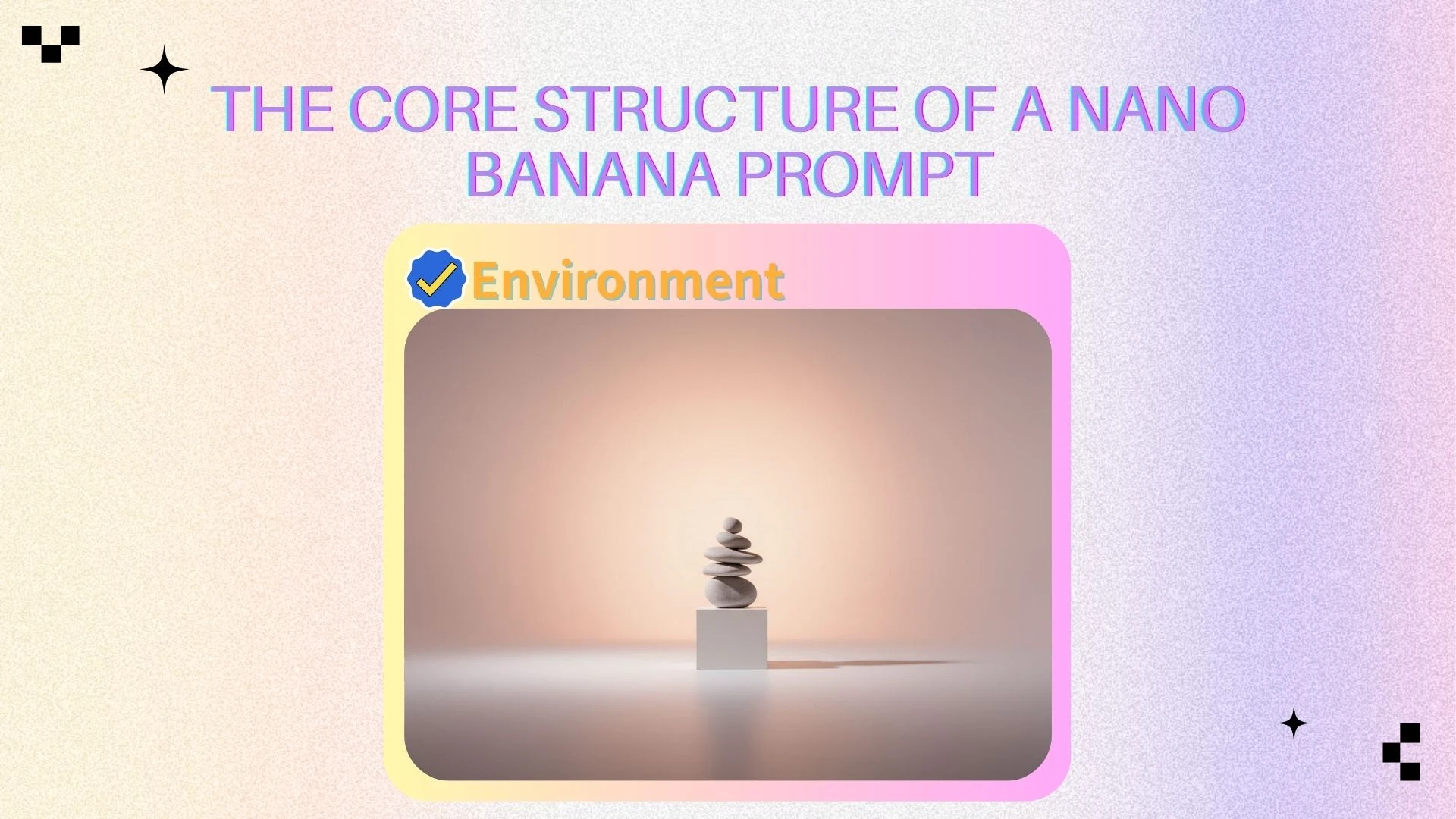
The environment defines the setting in which the subject exists and plays a major role in establishing mood, professionalism, and visual clarity. A well-specified environment helps the AI balance lighting, shadows, and color tones while grounding the subject within a coherent context. This can range from a simple studio background to a more complex real-world or conceptual scene. Clear environmental cues reduce randomness and improve overall visual cohesion.
Example:
Minimal studio background, soft gradient light
🖼 Composition
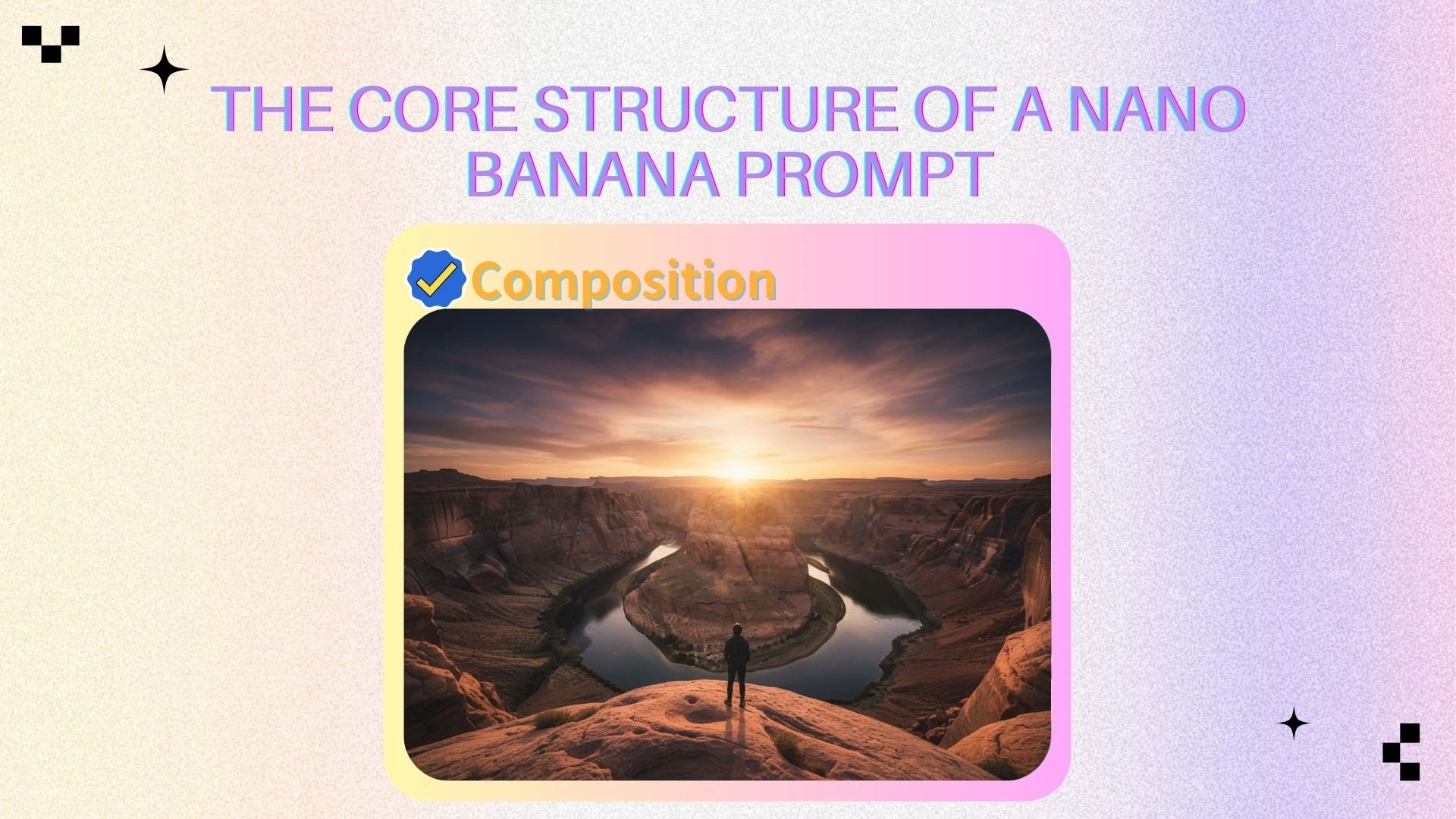
Composition dictates how the subject and supporting elements are arranged within the frame. It guides perspective, framing, and visual hierarchy, influencing how the viewer’s eye moves through the image. By explicitly defining composition, you help the Nano Banana model apply established photography and design principles instead of default or arbitrary layouts. This is especially important when generating multiple images that need to feel consistent.
● Close-up / wide shot
● Centered / rule of thirds
● Top-down / isometric view
Example:
Centered, cinematic composition
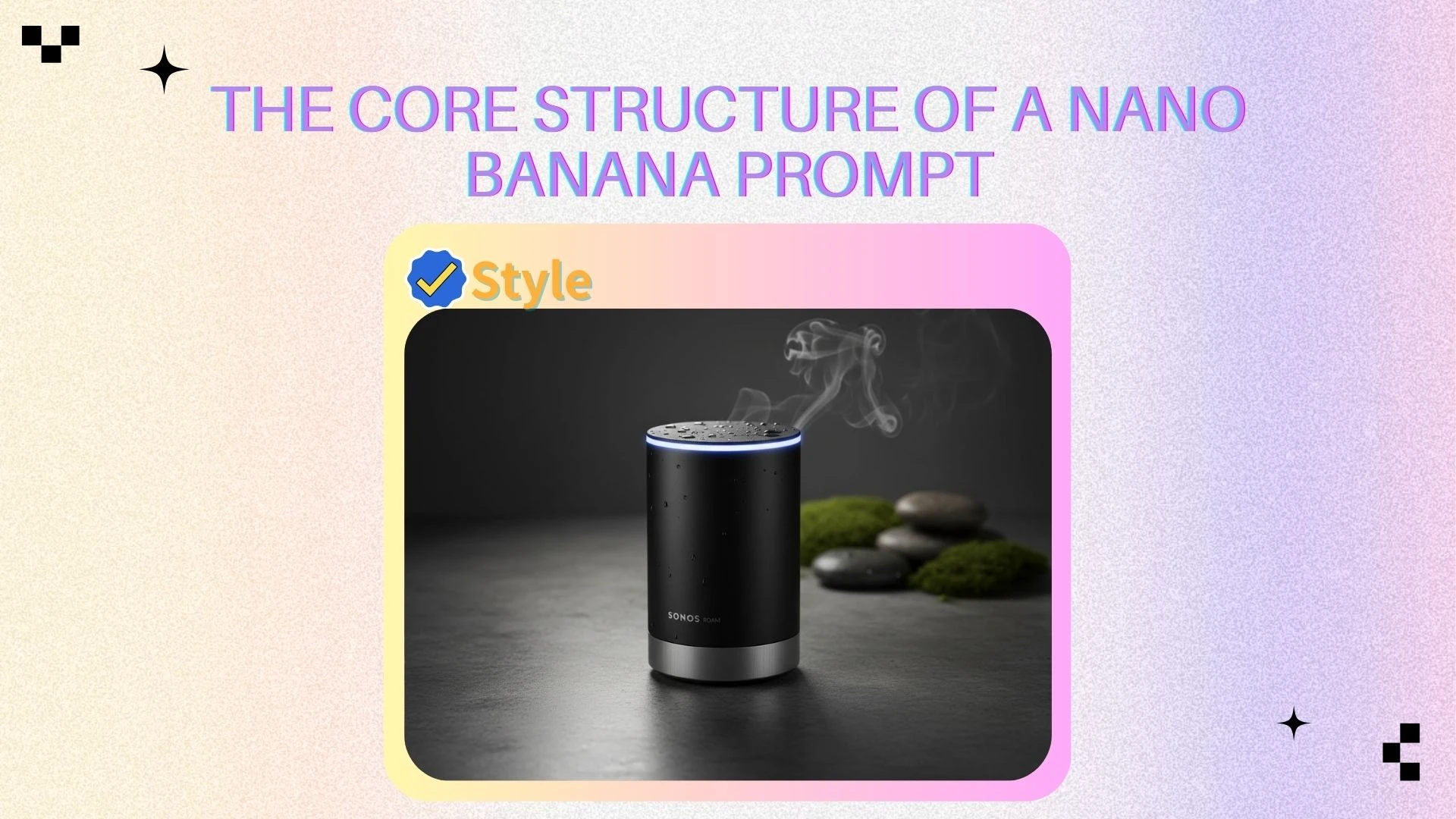
🎨 Style
Style communicates the overall visual language of the image. Rather than relying on vague descriptors, a Nano Banana prompt benefits from specific, recognizable style definitions that guide aesthetics such as realism level, illustration approach, or design philosophy. Clear style instructions ensure consistency across multiple generations and are critical for branding, UI design, and professional creative workflows.
● Cinematic product photography
● Anime illustration
● Modern SaaS UI design
Example:
Ultra-realistic product photography style
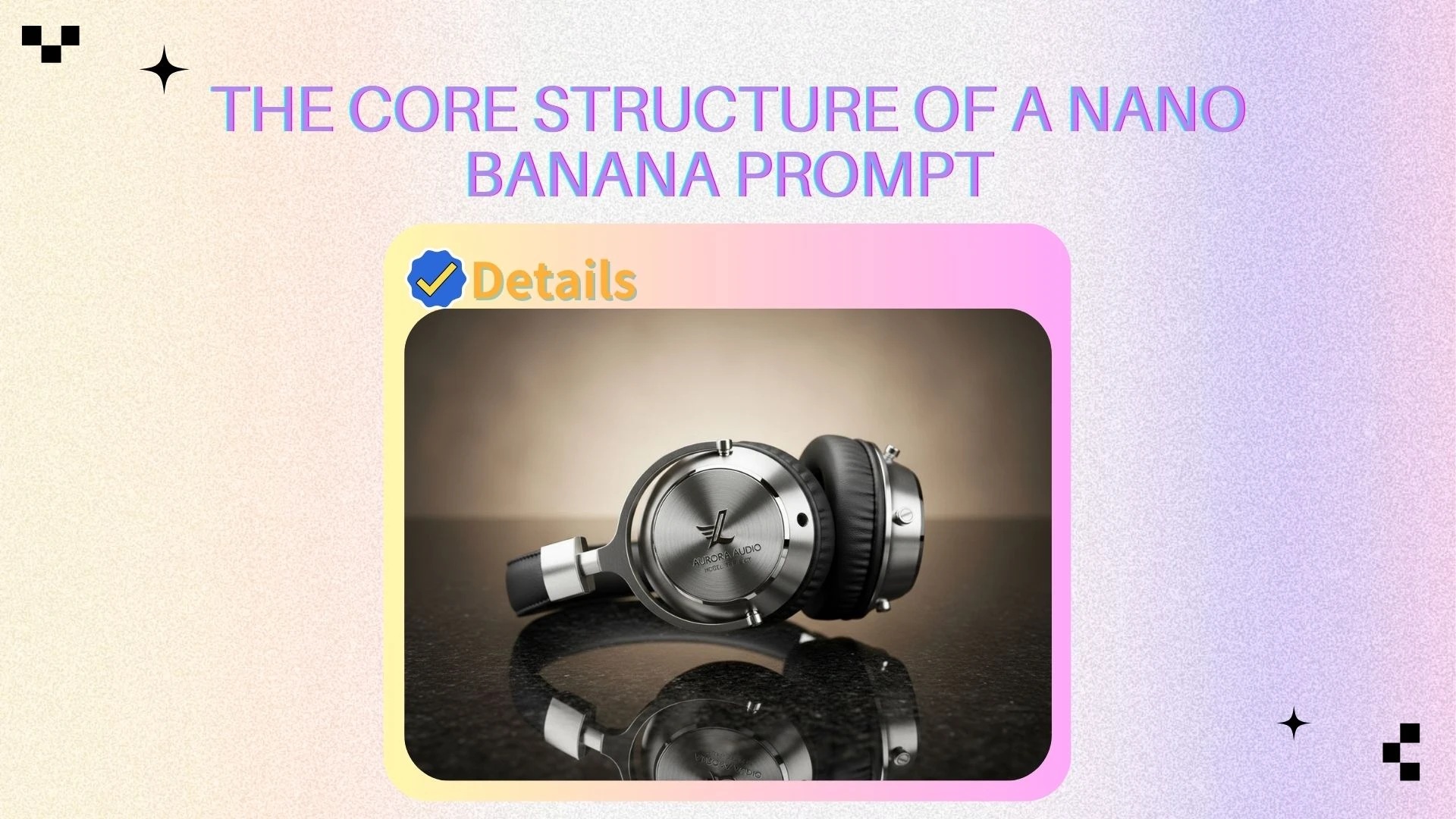
✨ Details
Adding micro-details elevates image quality and separates professional outputs from generic ones. Details such as reflections, textures, depth of field, and typography clarity introduce realism, polish, and depth. These elements often have a subtle but powerful impact on perceived quality, especially in close-up visuals, product imagery, and interface designs.
● Reflections
● Textures
● Depth of field
● Typography clarity
Example:
A luxury headphone floating above a reflective surface, sharp metallic textures, soft blur in the background, with all text elements crisp and readable.
⚙️ Technical Parameters (Optional)
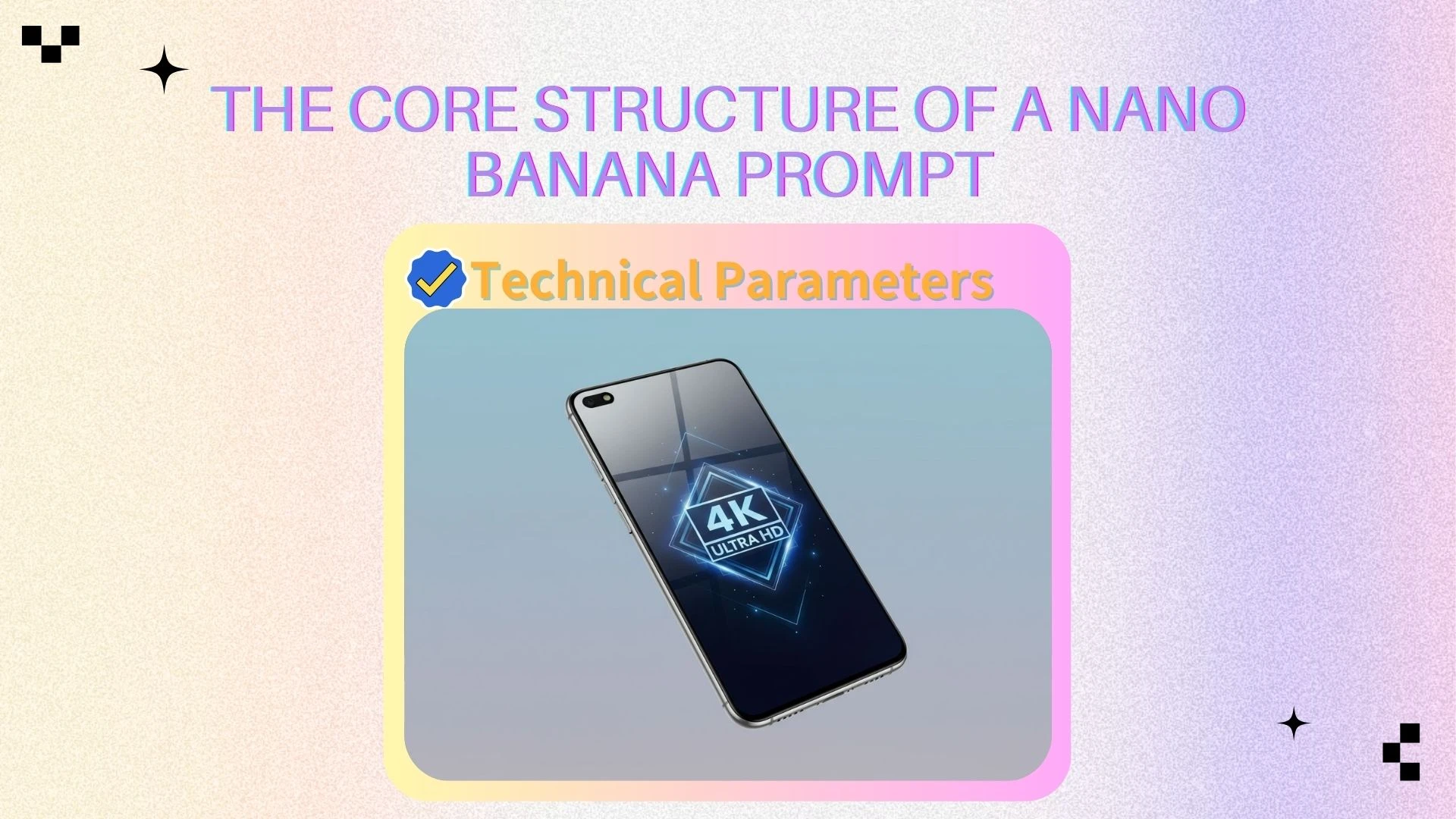
Technical parameters allow you to fine-tune the practical quality of the generated image. While optional, they are highly recommended for professional use cases where clarity and usability matter. Instructions related to resolution, sharpness, and edge cleanliness help ensure that outputs are suitable for real-world applications such as websites, presentations, or marketing materials. When combined with AIEnhancer, these parameters significantly improve execution accuracy and reduce the need for repeated adjustments.
● Ultra-high resolution
● Sharp focus
● Clean edges
Example:
A smartphone displayed in 4K resolution, with perfectly sharp edges, clean separation from a minimal gradient background, ready for high-quality marketing visuals.
🛠 Nano Banana Prompt Templates by Use Case
Following the methodology of the original guide, let’s organize practical Nano Banana prompts by category. Each is fully ready to use.
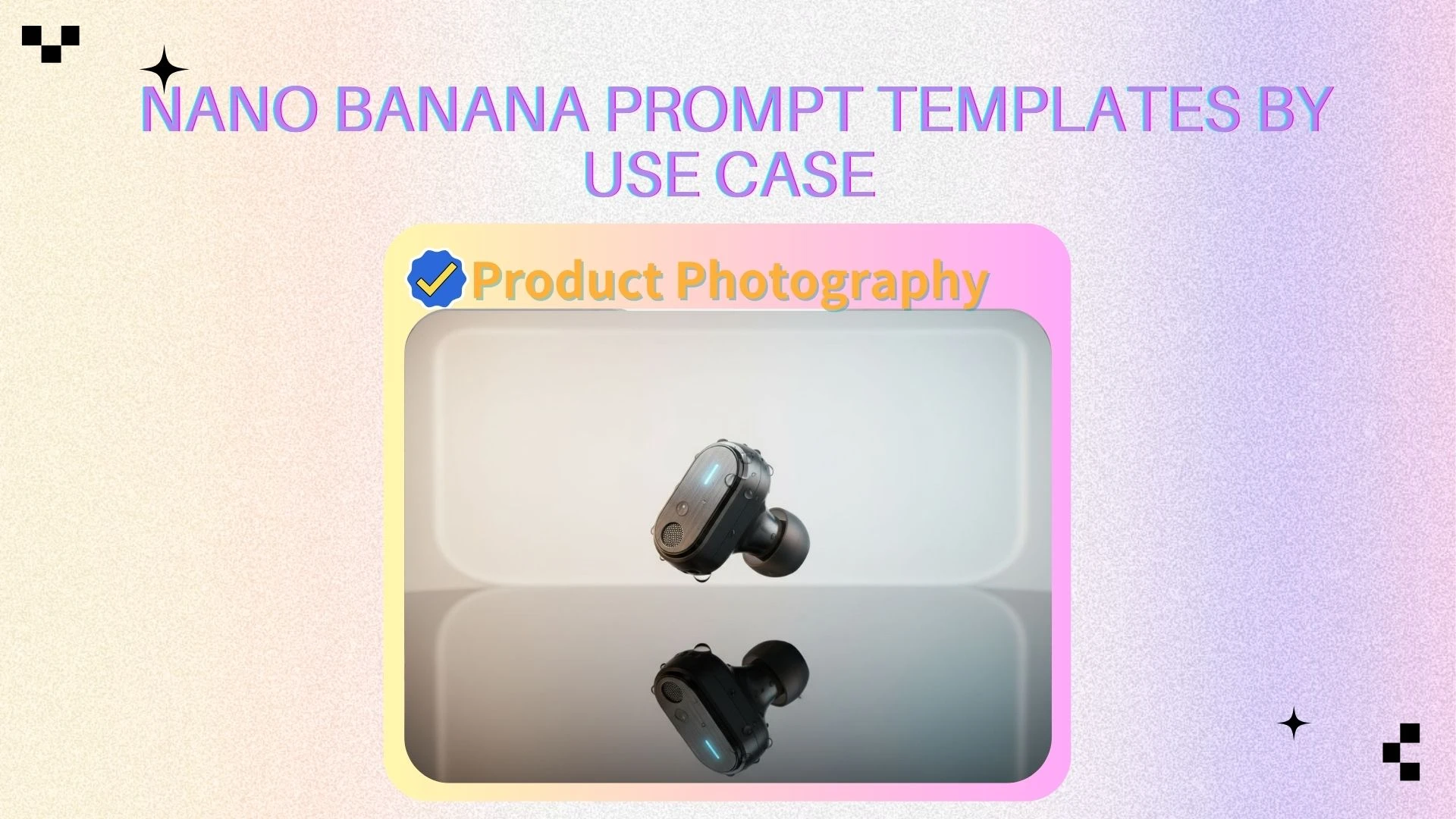
📷 Product Photography
Ideal for e-commerce, branding, and banners.
Example:
A premium wireless earbud floating above a reflective surface, minimal studio background, soft diffused lighting, ultra-realistic product photography style, sharp details, cinematic composition
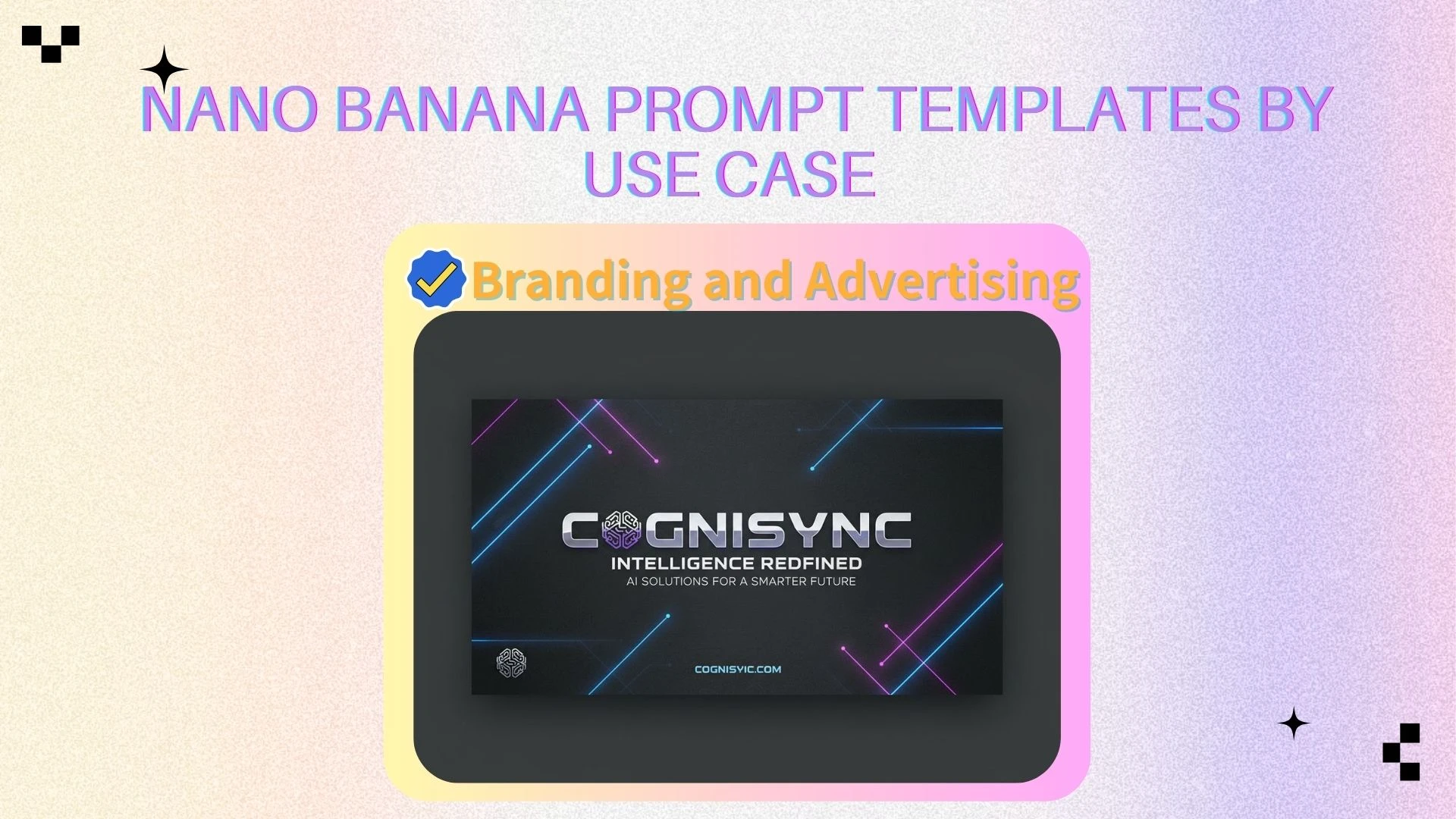
🎯 Branding and Advertising
Use Nano Banana prompts to create consistent brand visuals.
Example:
A bold AI startup brand poster, futuristic typography, dark background with neon accents, strong visual hierarchy, clean layout, professional branding style
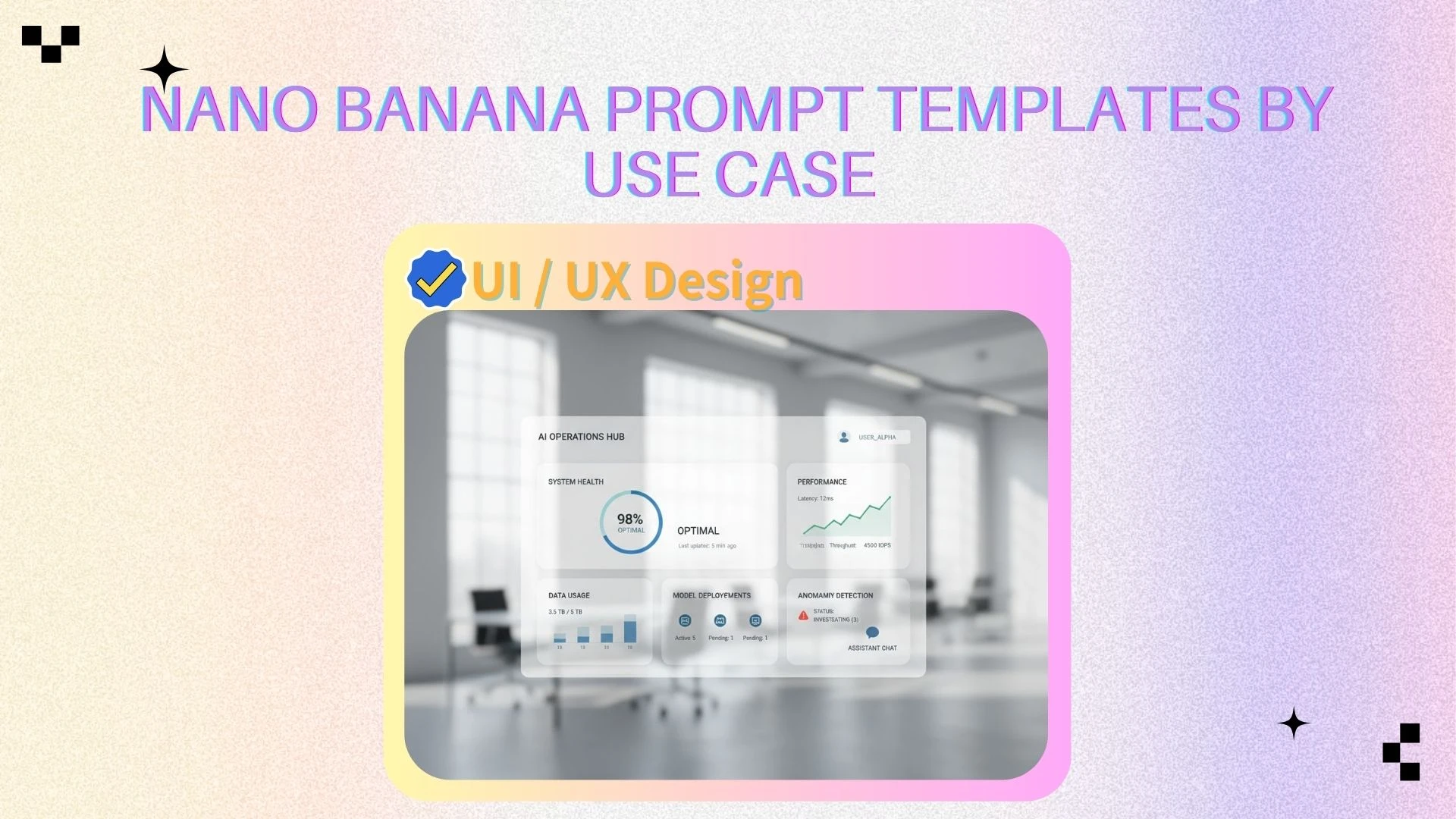
🖥 UI / UX Design
Perfect for SaaS dashboards, web apps, and AI tools.
Example:
A modern AI dashboard UI, clean layout, card-based design, light mode, clear typography, minimal color palette, realistic UI mockup
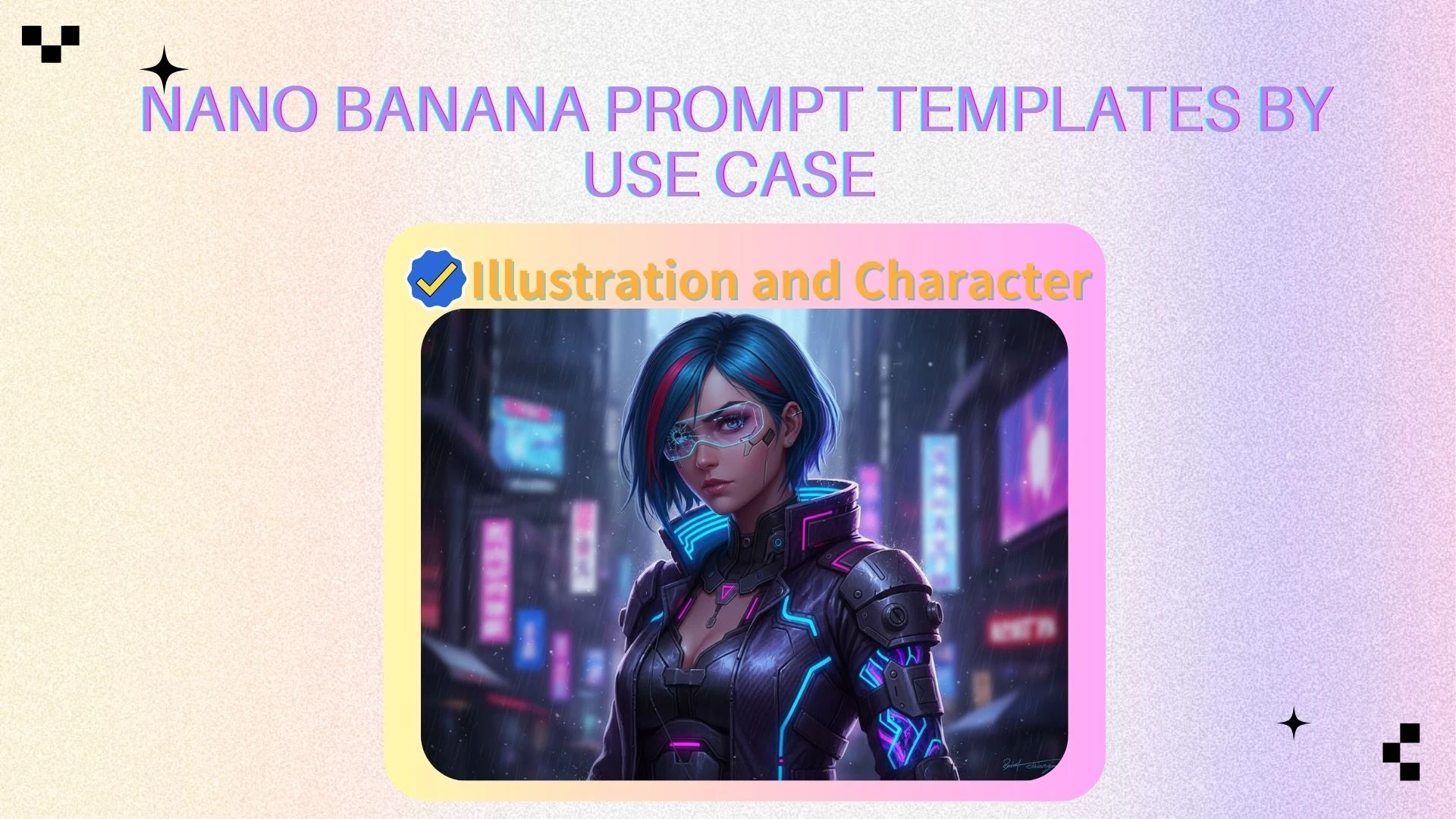
✏️ Illustration and Character Design
Use Nano Banana prompts for anime, concept art, or game characters.
Example:
A cyberpunk female character, half-body portrait, dramatic lighting, detailed outfit, anime-inspired illustration style, high contrast
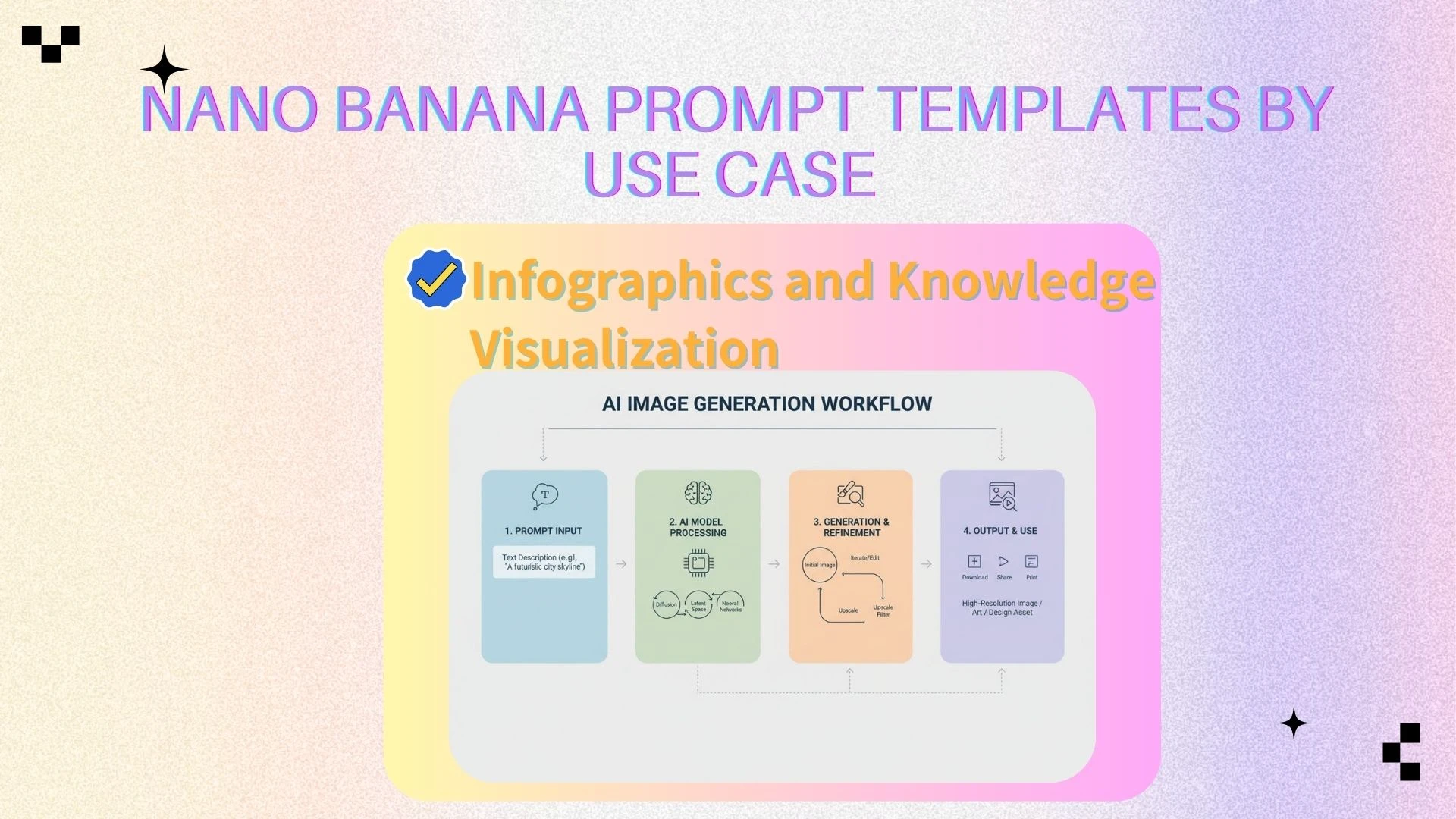
📊 Infographics and Knowledge Visualization
Turn data and concepts into clear visuals.
Example:
A clean infographic explaining AI image generation workflow, flat design, clear icons, readable text, structured layout
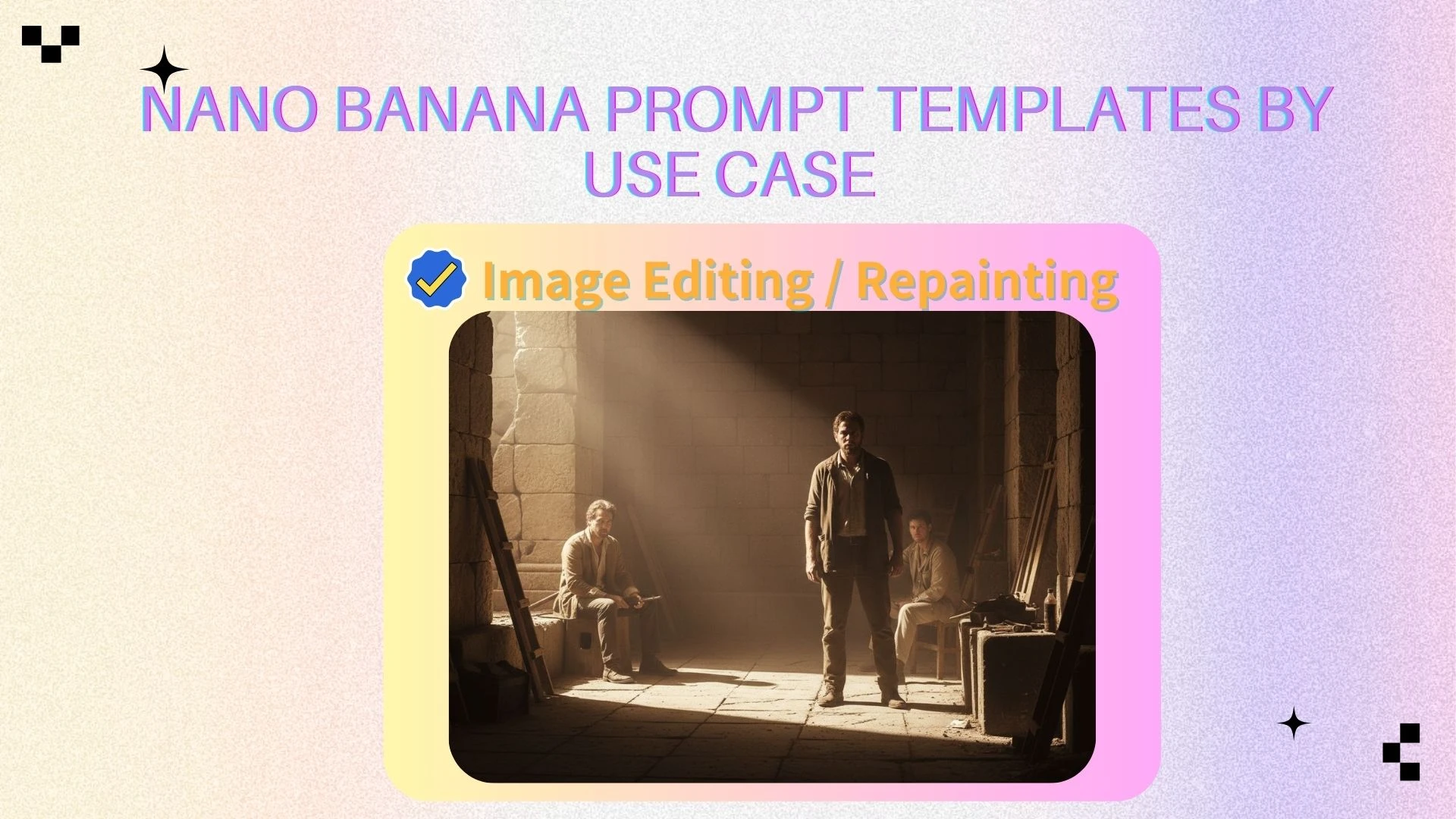
🖌 Image Editing / Repainting (Image-to-Image)
Enhance or transform existing images.
Example:
Enhance the uploaded image by adding cinematic lighting, improved texture detail, realistic shadows, consistent color grading
💡 Advanced Tips for Better Nano Banana Prompts
Even with templates, some prompts fail if the structure is wrong. Here’s how to improve your nano banana prompts.
🧠 Prioritize Instructions
Nano Banana models are sensitive to order. Place the most important descriptors first.
Incorrect:
Beautiful, ultra-detailed, product, headphones
Correct:
Premium over-ear headphones, centered composition, studio lighting, ultra-detailed textures
🎯 Replace Abstract Adjectives
Avoid vague words like “amazing” or “cool.” Instead, use visualizable terms.
Examples:
“Cool” → metallic blue reflections
“Beautiful” → soft rim light, balanced contrast
🗂 Build a Personal Prompt Library with AIEnhancer
With AIEnhancer, you can:
Save fixed style blocks
Lock composition and resolution instructions
Quickly replicate successful prompts
This reduces trial-and-error and ensures consistent output.
⚠️ Common Nano Banana Prompt Mistakes
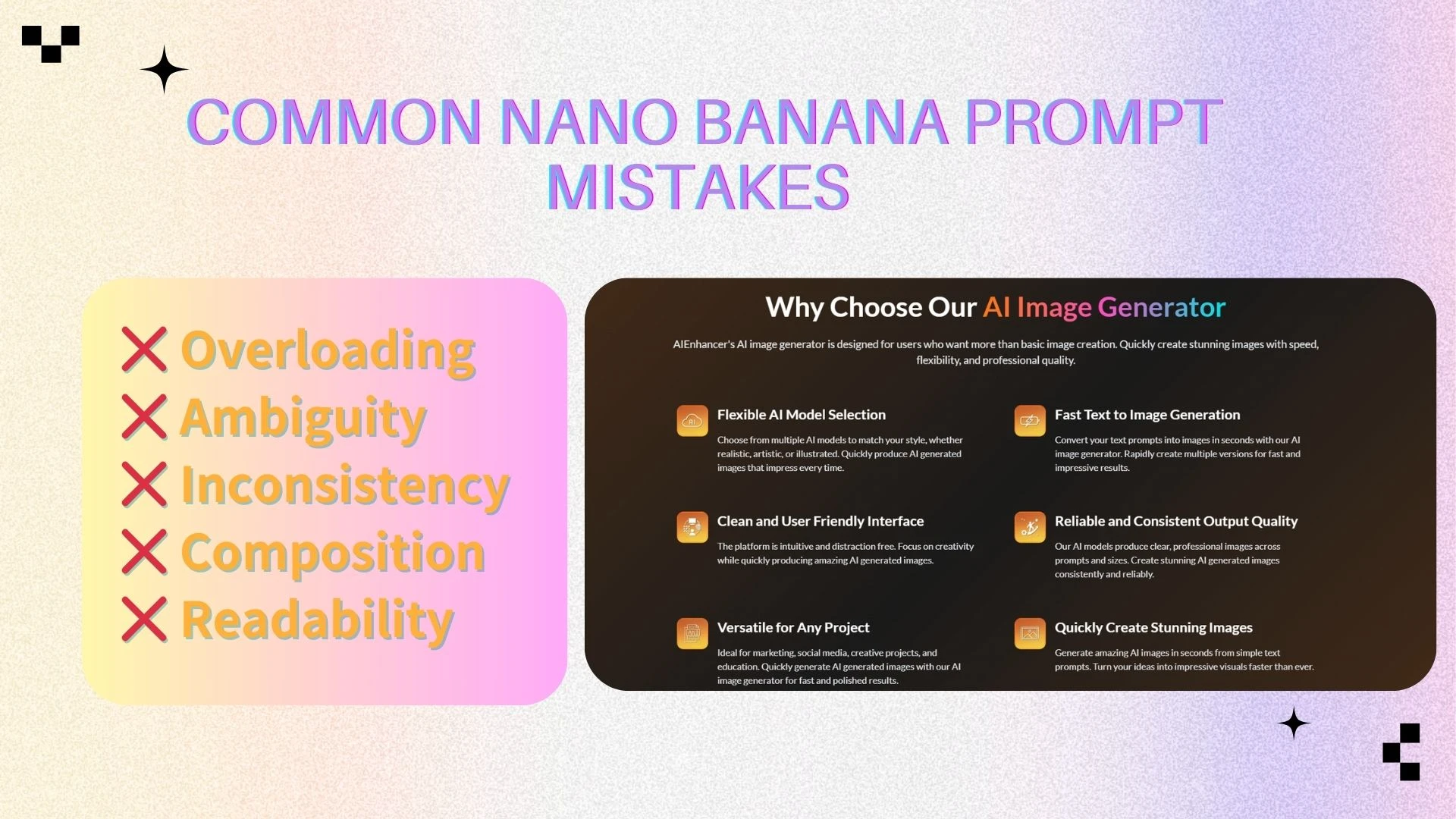
Even experienced creators can make mistakes that reduce the effectiveness of their Nano Banana prompts. Most issues arise from unclear instructions or overloaded prompts.
❌ Overloading
Combining multiple goals confuses the AI and produces cluttered outputs. Focus on one main objective per prompt.
❌ Ambiguity
A vague subject leads to directionless images. Always define the primary focus early.
❌ Inconsistency
Mixing incompatible styles confuses the model. Keep style instructions consistent and clear.
❌ Composition
Without composition cues, images may feel unbalanced. Specify framing, perspective, or focal points.
❌Readability
Text-heavy visuals can be hard to read. Ensure clarity, spacing, and hierarchy are specified.
Remember:
A nano banana prompt is a design brief, not a list of random adjectives. Structure and clarity are key to professional outputs.
🚀 Conclusion: Mastering Nano Banana Prompt as a Long-Term Skill
Professionals using Nano Banana prompts experience a significant boost in both efficiency and quality. Some of the main benefits include:
● Consistent, high-quality outputs
Structured prompts ensure the AI generates visuals that match your intent every time, reducing unpredictability and producing polished, professional results suitable for branding, marketing, or creative projects.
● Lower iteration costs
By providing clear instructions upfront, Nano Banana prompts minimize trial-and-error cycles. This saves time and resources, allowing you to generate multiple variations without constant adjustments.
● Reusable prompts for commercial applications
Well-crafted prompts can be saved and adapted across projects, creating a library of reliable instructions for repeated use. This is particularly valuable for product lines, social media campaigns, or design systems where visual consistency is essential.
Combined with AIEnhancer, your prompts transform from simple text into production-ready instructions, turning what used to be experimental iterations into a predictable, efficient workflow. Mastering Nano Banana prompt writing is a skill that compounds over time, enabling your AI creative process to become faster, smarter, and more professional with each project.